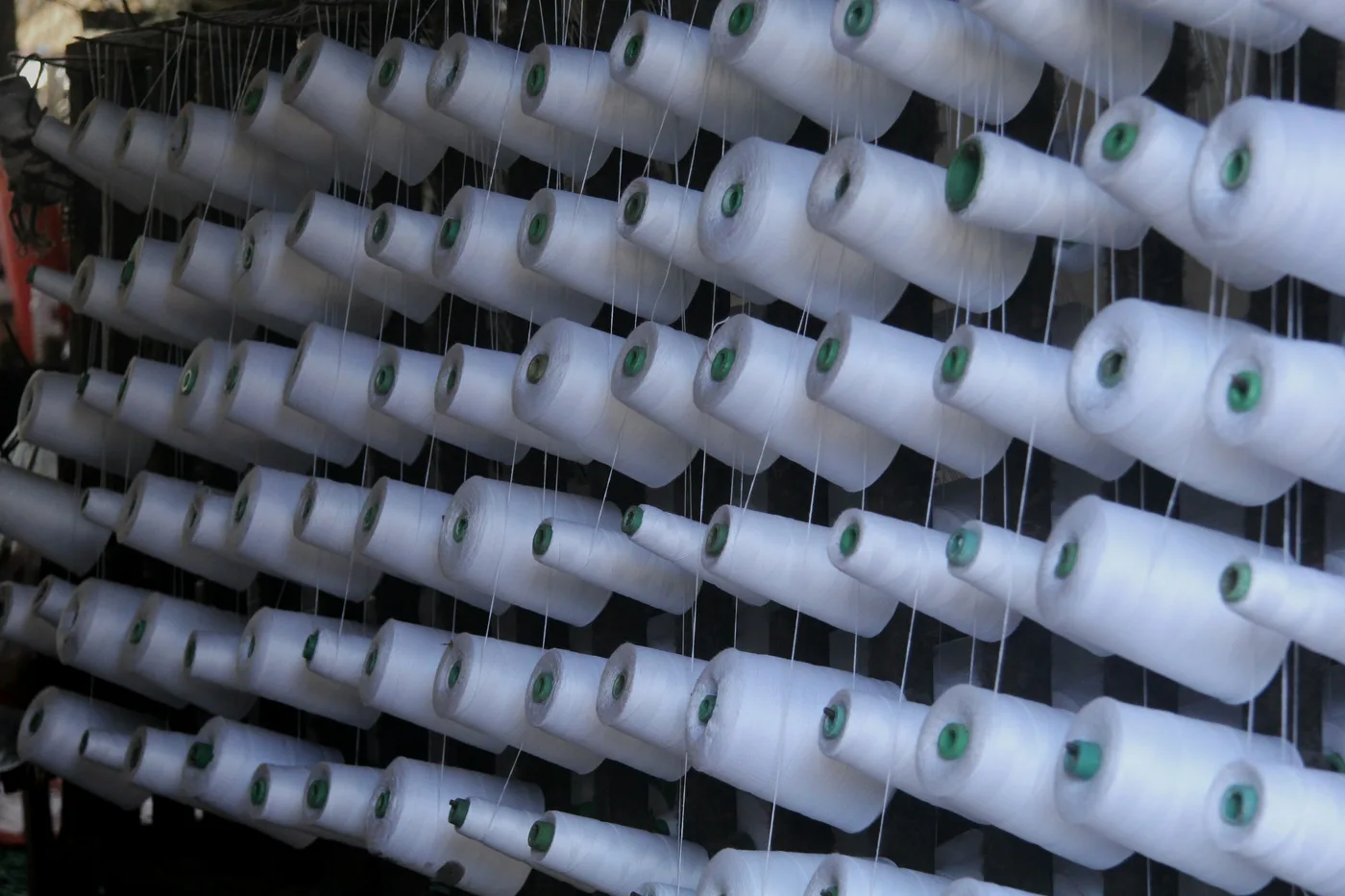
Shanghai Petrochemical included dope-dyed acrylic among its differentiated fibre products at the China International Industry Fair, according to a 14 October report reproduced by Sina from Shangguan News.
The display also covered anti-pilling, fine-denier and coarse-denier acrylic products. The company's own product overview separately lists dope-dyed acrylic within its established synthetic-fibre portfolio.
Moving colour into fibre production
Dope dyeing introduces colour at the fibre-production stage rather than relying on dyeing an already manufactured textile. The exhibition account describes dope colouring and physical modification as ways to reduce downstream pollution and improve processing efficiency.
Those are claims in the product presentation. The report does not give a measured water-saving rate or a like-for-like environmental comparison for a specified acrylic product.
A defined process boundary
The exhibit shows how colour can be part of a fibre supplier's offer, alongside properties such as fineness and pilling resistance. That shifts some colour decisions upstream in the manufacturing chain.
It does not mean acrylic manufacture is water-free, or that every subsequent finishing operation is eliminated. The available information supports a profile of the colouring route, rather than a quantified whole-product sustainability claim.